A Record Audience, a Powerful Debate, and a Celebration of Civil Discourse David Lose is America's Greatest Thinker for 2025
New York Mills, MN – June 2025 — On a day marked by tragedy in Minnesota and a nationwide call for civility, the 32nd Annual Great American Think-Off delivered what it has always promised: an open, honest, and deeply human conversation about life’s big questions.
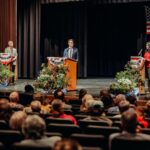
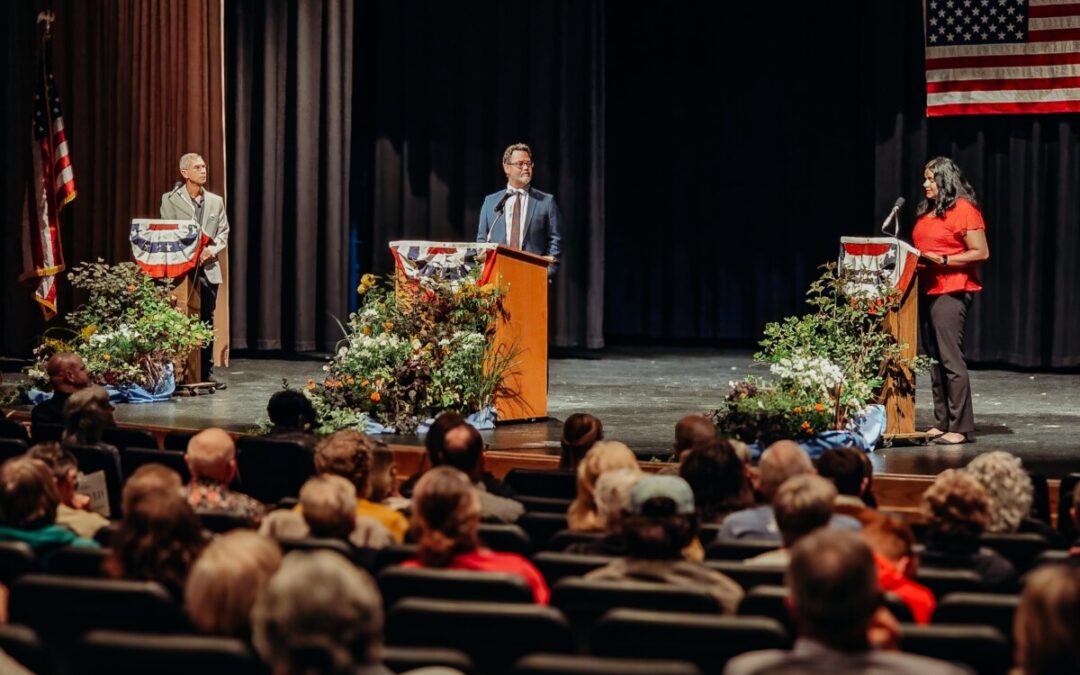
This year’s debate asked: “Is there only one truth, or are there many truths?” Before a record-setting audience of nearly 300 in rural New York Mills—and hundreds more tuning in via livestream—four citizen-philosophers took the stage to tackle this timeless and timely question.By the end of the night, the audience had cast its votes for who made the strongest argument, choosing David Lose, a pastor from Eden Prairie, MN, as America’s Greatest Thinker 2025, siding with his argument that there are, indeed, many truths.

Exploring the Nature of Truth: A Debate Recap
Each finalist brought a unique perspective to the stage, offering personal stories, philosophical insights, and persuasive logic in pursuit of clarity about what truth means—and how we can know it.
 David Eckel opened the night with a poetic metaphor, comparing truth to a forest—real and whole, yet impossible for any one person to fully comprehend. Like a visitor glimpsing just one part of a vast ecosystem, our understanding is always partial. But Eckel reminded us that we’re not alone in our quest: we learn from others through books, conversations, and shared experiences. While there may be one reality, truth is something we approach collectively.
 Pavithra Krishnan advanced to the final round with a powerful defense of one truth. Drawing from math and science, she argued that while humans have different perspectives, that doesn’t mean there are different truths—only different understandings. Truth, she said, exists outside of our opinions or feelings. It is not flexible, even if our knowledge is incomplete. Her essay and final remarks warned of the dangers of using the word “truth” too casually, suggesting that doing so can turn disagreements into personal attacks. Recognizing the difference between belief and truth, she argued, creates space for growth, empathy, and real dialogue.
 Jay Sieling, a semi-retired educator from Miltona, MN, reflected on memory and storytelling in his journey from believing in one truth to appreciating the many ways people find meaning. A lighthearted story from his childhood, possibly misremembered, served to highlight how emotional truths—the kind shared in families and passed through generations—can shape how we live and relate, even if the facts are fuzzy. “Stories matter,” he concluded, reminding us that truth can live in experience as much as in logic.
 David Lose rounded out the evening with a deeply philosophical and faith-informed argument that truth is not static, but dynamic. While he acknowledged our human longing for a single, solid truth, he challenged the harm that often comes when one version of truth is imposed on others. Quoting the Declaration of Independence—“We hold these truths…”—Lose suggested that truths can be held firmly but humbly, allowing for transformation through honest conversation. In a closing reflection, he spoke of a hymn sung at a recent funeral and a longing for a world where we live our truths, rather than constantly trying to prove them. His vision of truth was one of faith, humility, and generosity—and it won the hearts and votes of the audience.
Why It Matters More Than Ever
The 2025 Think-Off unfolded just hours after the shocking assassinations of Minnesota House Leader Melissa Hortman and her husband, and the shooting of State Senator John Hoffman and his wife. Minnesota Governor Tim Walz opened his press conference that morning by reminding the public that “peaceful discourse is the foundation of our democracy.” That same evening, in New York Mills, a room full of strangers came together to do exactly that—demonstrate the possibility of respectful, thoughtful, civil dialogue.
“Civil discourse has always been at the heart of the Think-Off,” said Betsy Roder, Executive Director of the New York Mills Regional Cultural Center, the event’s host. “This year, more than ever, we saw the importance—and the hunger—for people to come together, listen deeply, and wrestle with complex ideas in a respectful way.” Roder encouraged audience members to "be the light, to connect, to listen, and to be OK with difficult conversations, knowing we won’t all always agree, but that at the end of the day, there is so much more that connects us than divides us."

Honoring All the Finalists
Two additional finalists—Miriam Santos of Namibia and Sherry Vavra of Arkansas—were unable to attend the live debate but received Honorable Mentions. They were joined by alternates Laurie Fitz (MN), Blaine Rada (IL), Ron Stewart (MN), and Marcia Witt (MD), all of whom traveled to New York Mills to participate in the weekend. Two more writers received Honorable Mentions: Katherine Tencza (NJ) and Angela Loupe (TN).
All twelve recognized essays will be published on kulcher.org.
Click here for 2025 Great American Think-Off Finalist Essays >
2025 Honorable Mention essays coming soon.
A Legacy of Thoughtful Conversation
The Great American Think-Off is a one-of-a-kind, annual philosophy debate that brings big ideas to a small town. Each year, thinkers from all over the world submit essays in response to a central question. Four are chosen as finalists, awarded $500 and an expense-paid trip to Minnesota, where they debate live before an audience that votes to crown America’s Greatest Thinker.
Now in its 32nd year, the Think-Off has received entries from all 50 states and more than 30 countries, proving that rural communities can be powerful conveners of civil, national dialogue.
Gratitude
The 2025 Great American Think-Off was moderated by Trygve Throntveit, Global Fellow at the Woodrow Wilson International Center for Scholars and Director of Strategic Partnerships at the Minnesota Humanities Center, which generously sponsored the event for the second year in a row, along with the Lake Region Arts Council, the Minnesota State Arts Board, and many local businesses and donors. See them all in our post about the 2025 Great American Think-Off Weekend.


This activity is made possible in part by the voters of Minnesota through grants from Lake Region Arts Council and the Minnesota State Arts Board, thanks to a legislative appropriation from the arts and cultural heritage fund.
Questions? Contact us at 218-385-3339 or info@kulcher.org.